 0161 962 7261
where the money actually goes in a £30,000 kitchen. the honest breakdown
Quick answer: In a £30,000 kitchen, around 35% (£10,500) is typically spent on cabinetry, 25% (£7,500) on appliances, 15% (£4,500) on installation, and 12% (£3,600) on worktops. The remaining 13% usually covers tiling, lighting, electrics, and a contingency buffer. Of all these, installation and appliances are the two areas where costs tend to vary the most, and where homeowners are most likely to be caught off guard.
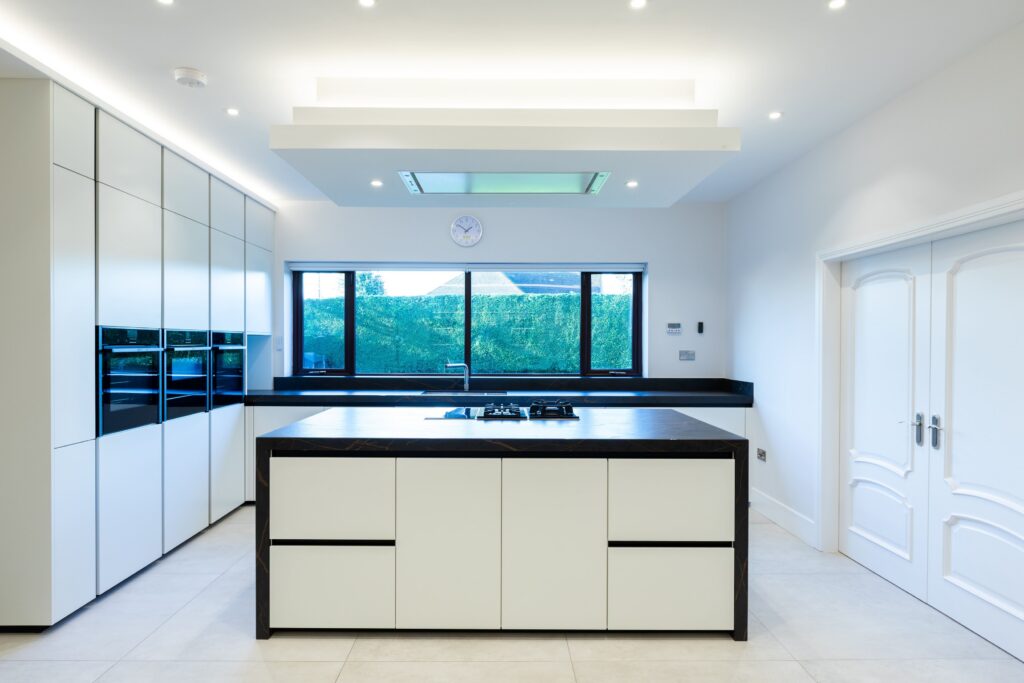
A £30,000 budget sits firmly in the middle of the market for a German kitchen in the UK. It’s a figure many customers arrive with when they first visit our Altrincham showroom, and it’s enough to achieve a well-specified handleless kitchen with quality appliances. But the number itself doesn’t tell you much until you understand how it’s allocated. Cabinetry, appliances, installation, worktops, tiling, electrics, and contingency all draw from the same overall budget, some relatively fixed, others far more flexible. This guide breaks it down line by line, with real figures, so you can plan with clarity and avoid surprises.
| Category | % of budget | Typical £ figure |
|---|---|---|
| Cabinetry (units, doors, carcasses, hardware) | 35% | £10,500 |
| Appliances (oven, hob, fridge, dishwasher, extraction) | 25% | £7,500 |
| Installation (labour, site prep, plumbing connection) | 15% | £4,500 |
| Worktops (material, templating, fabrication and fitting) | 12% | £3,600 |
| Tiling and flooring | 5% | £1,500 |
| Lighting and electrics | 5% | £1,500 |
| Contingency buffer | 3% | £900 |
| Total | 100% | £30,000 |
the full breakdown at a glance
The proportions below reflect a typical £30,000 German kitchen: medium-sized, handleless, with mid-range integrated appliances. These percentages will shift depending on layout and specification, but they provide a reliable framework to work from.
Cabinetry and installation tend to be tied closely to the size and scope of your kitchen. Appliances and worktops, on the other hand, offer more flexibility, both up and down.
cabinetry (£10,500): the structural core
Cabinetry is where German kitchens earn their reputation, and where cutting costs tends to show up years later rather than immediately. At around £10,500 for a mid-sized kitchen, you’re paying for 19mm carcasses, precision-manufactured door fronts, Blum or Hettich hardware, and the accuracy that ensures everything aligns perfectly on installation.
This figure typically includes wall units, base units, tall units such as larders and oven housings, island carcasses, drawer boxes, door fronts, internal fittings like pull-outs and bin systems, and all associated hardware. In a Schüller kitchen at this level, that usually equates to around 30–40 carcasses across a standard layout.
If you need to reduce costs here, it’s better to simplify the layout, fewer tall units or a more selective approach to internal fittings, rather than compromising on carcass quality or hardware. Thinner materials and lower-grade hinges are often what lead to sagging doors and loose fittings within a few years.
appliances (£7,500): the most flexible line
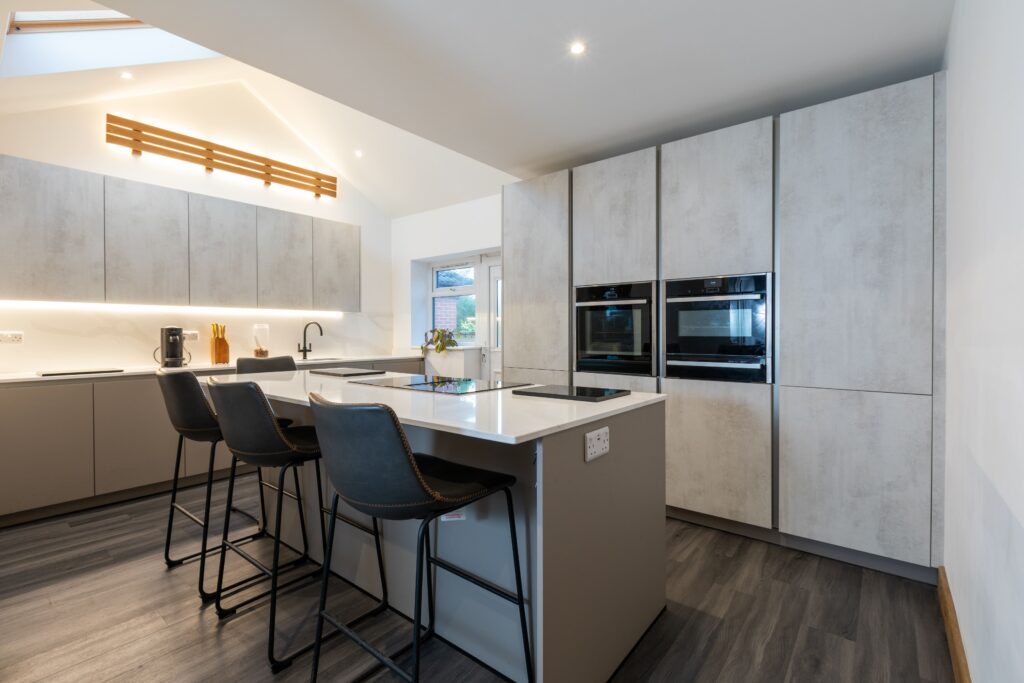
Appliances make up roughly 25% of the budget, but this is the most variable category. A practical Bosch appliance package, including oven, hob, fridge-freezer, dishwasher, and extraction, will typically fall between £4,500 and £5,500. Step up to brands like Miele or Gaggenau, add a steam oven or wine fridge, and that figure can quickly rise to £12,000–£16,000, meaning other areas of the budget need to adjust.
The key decision is identifying what you’ll genuinely use day to day. A combi steam oven is a strong investment for someone who cooks regularly. For households where the microwave does most of the work, it can end up being an unnecessary luxury that pulls budget away from more practical elements.
Buying appliances independently is an option, but whether it saves money depends on your designer’s supplier relationships. Timing is often the bigger issue. Appliances need to arrive in line with installation — delays or early deliveries can disrupt the entire schedule.
installation (£4,500): why labour costs add up
Installation typically accounts for around 15% of the budget, roughly £4,500, and often surprises homeowners expecting it to be lower. This covers removal of the existing kitchen, preparation of the space, installation of units, adjustments for walls and floors, plumbing connections, extractor fitting, hardware installation, and initial snagging.
What’s often excluded, and should always be confirmed, are surrounding works such as replastering, additional electrical work, gas certification if appliances move, and waste removal. These are common sources of unexpected costs and can add £1,500–£3,000 to the project.
A fitter-led installation, where the installer is closely involved in the design and technical planning, reduces the risk of costly mistakes. This is very different from a supply-only approach where an independent fitter works from drawings they weren’t involved in creating.
worktops, lighting, and the contingency buffer
Worktops at around 12% (£3,600) will typically cover quartz in a medium-sized kitchen. Brands such as Silestone, Caesarstone, and Dekton usually fall within £400–£700 per linear metre, including fabrication and installation. Natural stone or higher-end materials can push this closer to £5,500–£7,000. Templating, where measurements are taken on-site before fabrication, often adds an additional £200–£400.
Lighting and electrics at around 5% (£1,500) covers standard downlights, under-cabinet LED lighting, and minor electrical adjustments. More complex setups, including smart systems or extensive rewiring, can increase this to £2,500–£3,500.
A 3% contingency (£900) is low, particularly if any building work is involved. For broader renovation projects, a contingency closer to 15% is generally more realistic, especially where structural or service changes are part of the plan.
“What I see most often is clients focusing on the cabinetry quote and treating appliances and installation as secondary decisions. But those two lines can swing the total by £5,000 to £10,000, depending on the choices made. The customers who manage kitchen budgets most effectively are the ones who lock in their appliance list early and build the rest of the quote around it.” – Danil Sugakov, Director, Suga Küchen
common mistakes to avoid
Assuming installation includes everything. Waste removal, gas certification, replastering, and floor levelling are often excluded unless clearly specified. Finalising appliances after cabinetry is ordered. Appliance dimensions affect cabinet design, and late changes can be costly.
Holding too small a contingency. 15% is more realistic where building work is involved.
Comparing quotes without matching specifications. Hardware, materials, and inclusions can vary significantly. Treating worktops as part of cabinetry. They are almost always a separate cost and should be quoted independently.
frequently asked questions
Why does installation cost so much for a kitchen?
Kitchen installation involves skilled carpentry, plumbing, and often electrical work. It requires precise setting-out, adjustment for uneven surfaces, and familiarity with the specific kitchen system. At around 15% of the total budget, you’re paying for experience, accuracy, and reduced risk of costly errors.
Are appliances cheaper if I buy them separately?
Sometimes, but not always. Designers often have access to competitive supplier pricing. The more important factor is coordination, appliances must arrive at the right time to avoid delays. Always confirm specifications and delivery timelines before purchasing independently.
Where can I save money without compromising quality?
The best areas to adjust are appliance brands, worktop materials, and internal fittings. Avoid cutting costs on carcass construction, hardware, or installation, as these directly impact longevity.
What’s a realistic contingency for a kitchen project?
For a straightforward kitchen replacement, allow at least 10%. For projects involving building work, aim for 15–20% of the total spend to account for unexpected issues.
Do worktop choices affect the budget significantly?
Yes. Quartz typically ranges from £3,000–£4,500, while premium materials can reach £6,000–£8,000. Worktop design can also influence installation costs, particularly with larger islands or unsupported overhangs.
Wherever you are in your kitchen plans, a short conversation with one of our designers can save weeks of second-guessing. Chat with a designer, no pressure, no sales pitch, just practical guidance grounded in real installation experience.